Write the class, then cut
Waterproof, water-resistant and deck-siped are different classes. A buyer can choose any of them; Helly Hansen will not upgrade the printed claim after the gold sample is signed.
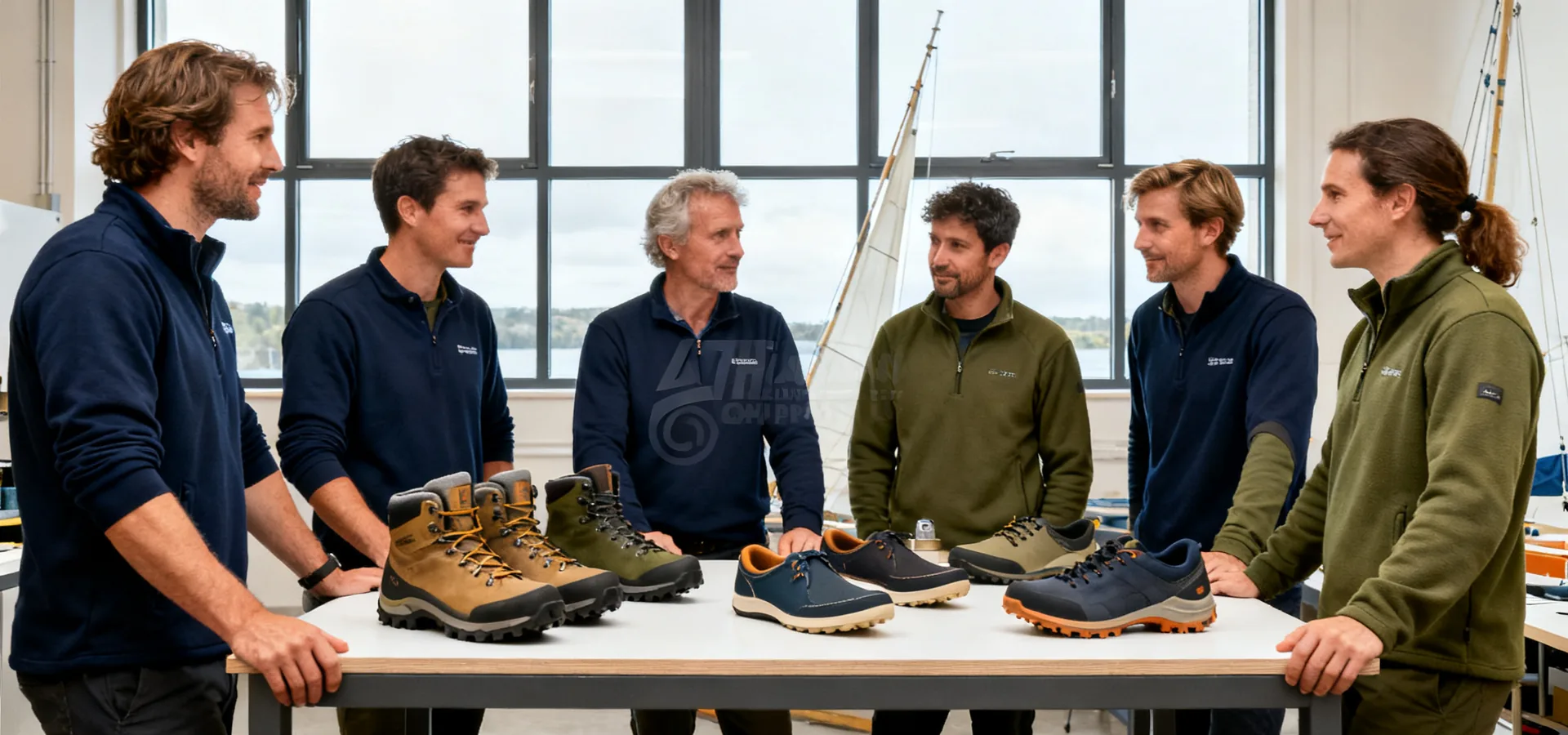
Helly Hansen plans hiking boots, sailing shoes and trail platforms as a documented last library, not as a seasonal mood board. The program desk writes construction sheets that procurement and product teams can audit.
The company story is told as construction milestones because buyers ask when a last was frozen, when deck compounds split from hiking lugs, and when membrane files were separated from DWR-only uppers. Dates below describe program discipline, not a marketing anniversary calendar.
Helly Juell Hansen started in 1877 with weather protection for Norwegian crews. The footwear desk later split hiking, sailing and trail lasts so a deck shoe could not inherit a hiking boot’s toe spring during grading. Heel-to-toe drop now sits on a 4–12 mm map by activity.
Waterproof hiking constructions received a 10,000 mm hydrostatic head target with taped seams on nominated SKUs. PU-coated and DWR-only uppers stayed in the book, but they lost the right to carry a membrane claim. That split still governs membrane hikers versus water-resistant trail shoes.
Sailing shoes gained siped non-marking rubber and salt-fog wear notes. Marina buyers no longer receive a hiking lug that marks a gelcoat deck. Trail running remained in the foam lane rather than being stretched into a boat shoe.
Line reviews now travel with ISO 9001:2015 process records, amfori BSCI factory files and OEKO-TEX STANDARD 100 letters for textile lots. SATRA flex, bond and abrasion notes sit next to the gold sample instead of in a separate marketing PDF.
Waterproof, water-resistant and deck-siped are different classes. A buyer can choose any of them; Helly Hansen will not upgrade the printed claim after the gold sample is signed.
Lug tools, last codes and overlay maps stay with the live SKU. A replenishment order cannot silently swap a hiking lug for a lifestyle cupsole to save a week.
Factory capacity is discussed after the construction sheet exists. Volume talk without drop, density window and destination-market labeling is treated as an incomplete brief.

Owns drop maps, width blocks and size-run approval for hiking and trail families.

Separates GORE-TEX bootie SKUs from PU coating and DWR-only uppers on the tech pack.

Keeps non-marking sailing outsoles off hiking lug tools and writes salt-fog notes.

Maps retail, wholesale, club-team and OEM clocks so one PO does not hide three lead times.


Bring last codes, size-run counts and the weather path. The contact page carries address, hours and the full form; product cards still open a short quote dialog.
Contact Us